Home · Services · Lighting & Ceiling Fan Installation
Lighting & Ceiling Fan Installation in Port Orange, FL
Quick answer
Ceiling fans earn their keep through long humid summers, while recessed lights and porch fixtures change how older block homes feel at night. Installations sort switching, box ratings, and fan support first, especially where attic heat and moisture age fittings early.
Lighting & Ceiling Fan Installation in Port Orange starts with the local read: ranch and block homes in the established neighborhoods, newer subdivision homes in the growth sections, condo and townhome stock near the creek and the corridors, and apartment buildings along the main roads. The Spruce Creek side of the service area and the city's hot humid summers with daily storms and lightning, mild winters, and hurricane season exposure set the order of work, and the scope names that order in writing before anyone commits to a price.
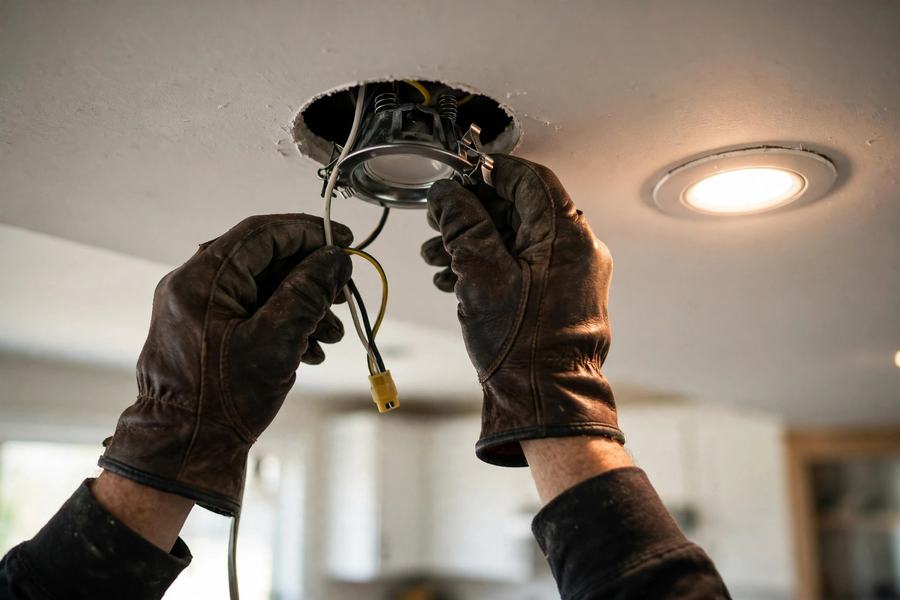
How we approach this job
Diagnosis and insurance documentation: For lighting & ceiling fan installation in Port Orange, the buying situation is a problem with a cause: find the real source, document it with photographs and readings for any claim, and only then price the fix.
Signs you need lighting & ceiling fan installation
- A fan that wobbles, hums, or hangs from a box never meant to hold it. It usually means the ceiling box may not be rated for the fixture's weight and motion.
- Rooms lit by one tired ceiling fixture and a plan for recessed lighting. It usually means the switch and circuit layout no longer matches how the room is used.
- Exterior lighting for a dark entry, dock, or lanai. It usually means in fan climates the fan is equipment, and its mounting is a safety line.
- Fixtures flickering on a circuit that tests sound (a fixture fault, not a wiring fault). It usually means the fixture or its driver is failing; replacing it closes a problem a wiring call would not.
What the job involves
What affects the price
- Fixture count and ceiling height and access
- Whether new switching or only fixture swaps are in scope
- Fan rated box installation where the existing box is not rated
- Exterior runs and any trenching or conduit for landscape and dock lighting
When it is an emergency
Lighting is scheduled work, except where the fault is the circuit rather than the fixture: flicker across multiple fixtures, heat at a switch, or a breaker involved moves the job to the repair pages. A fan that drops its speed settings or reverses randomly is usually a control or receiver fault, a part level fix, not a new fan.
PLACEHOLDERLighting & Ceiling Fan Installation across the Port Orange area
Related services
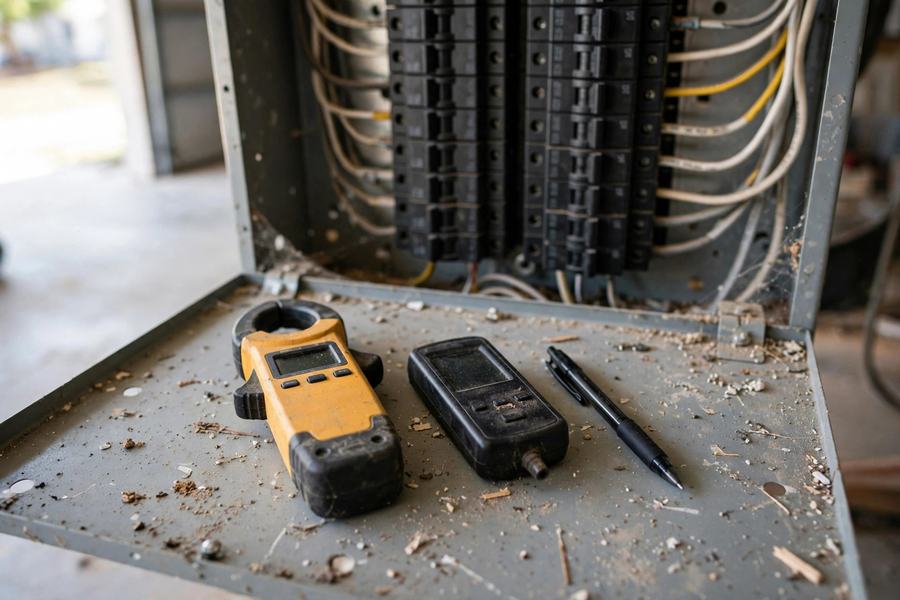
Emergency Electrical Repair
When a panel runs hot or a storm knocks power sideways in Port Orange, the check starts at the meter before anything is reset. Older ranch blocks and fast-filling newer homes fail differently, so the fault trace follows the house, not a script.
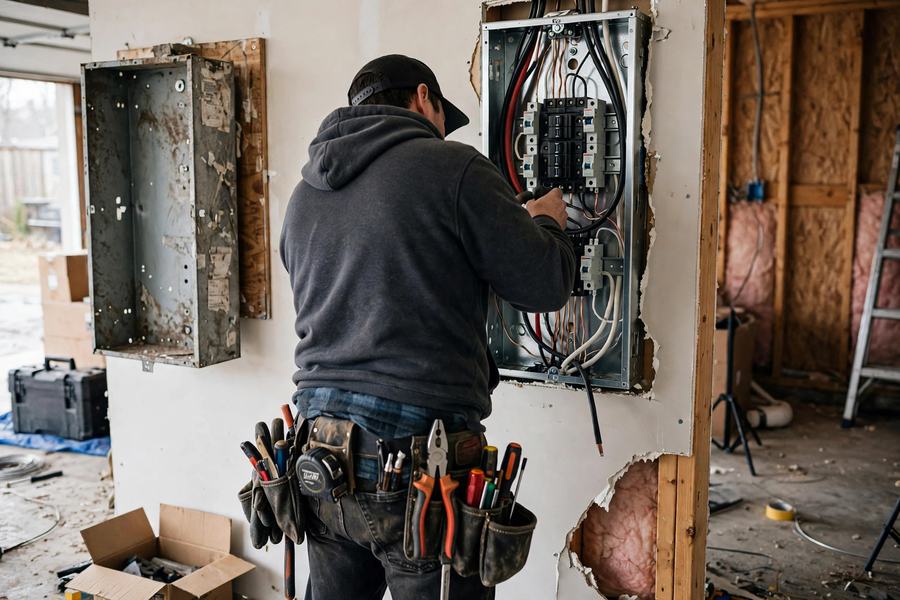
Breaker Panel Replacement & Upgrades
Many established ranch houses still run their first panel while subdivisions added in the growth years filled theirs within months. Replacement sizing looks at hangar, shop, and pool loads already planned, plus grounding and permit steps written out plainly.
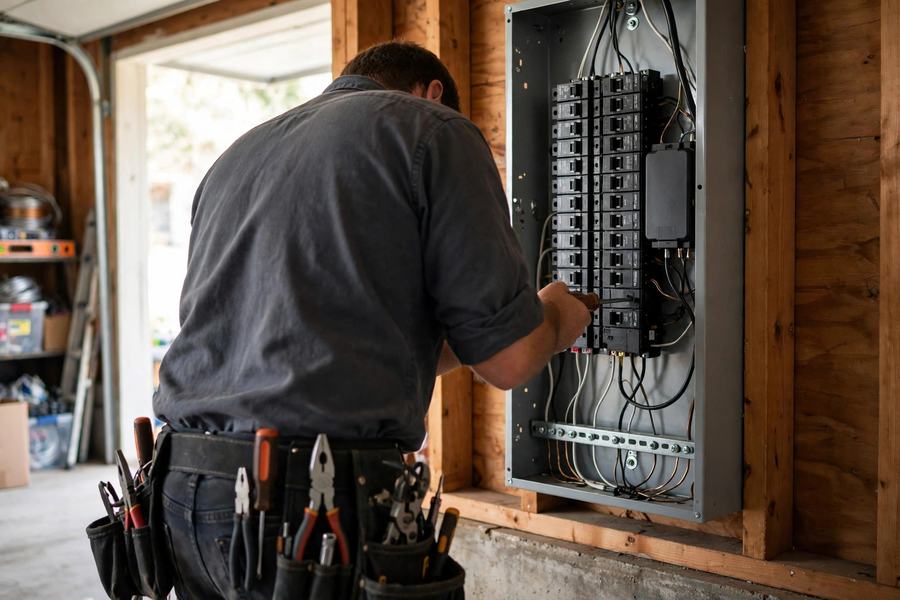
Whole-Home Surge Protection
Afternoon lightning is routine here, and one strike can take a well control, an air handler board, and kitchen appliances together. A single device fitted at the panel is scoped for creek-side condos and detached houses alike, with limits explained upfront.
Generator Hookup & Installation
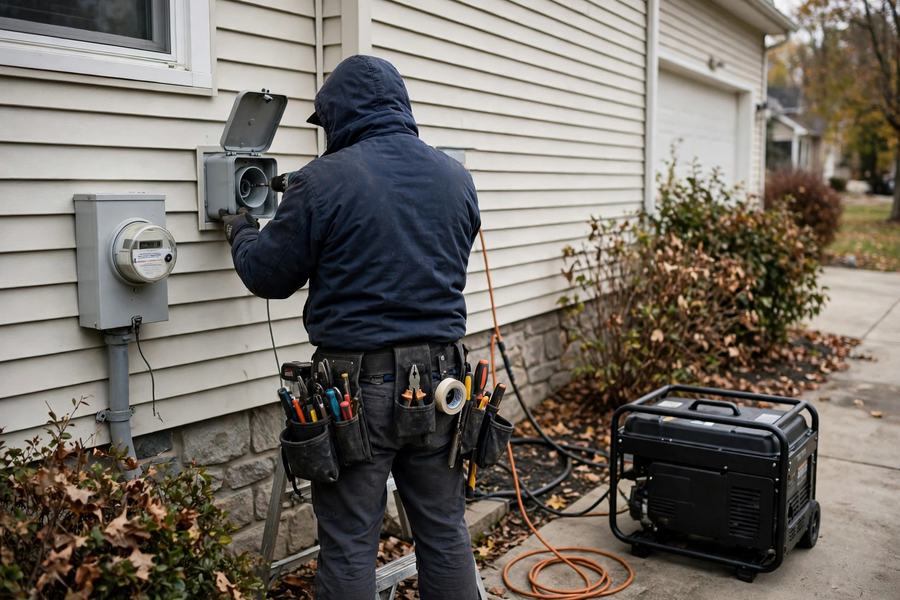
Hurricane outages push the question down to essentials: keep food cold, keep lights on, keep one way to stay cool. Hookups are sized to that short list through an interlock or transfer switch, never through a risky backfeed cord.
Lighting & Ceiling Fan Installation questions, answered
When is lighting & ceiling fan installation an emergency?
Lighting is scheduled work, except where the fault is the circuit rather than the fixture: flicker across multiple fixtures, heat at a switch, or a breaker involved moves the job to the repair pages. A fan that drops its speed settings or reverses randomly is usually a control or receiver fault, a part level fix, not a new fan.
What affects the price of lighting & ceiling fan installation in Port Orange?
The main price factors for lighting & ceiling fan installation are covered in the cost section above. The contractor confirms the exact price in a written estimate after seeing the job, and nothing is owed until you approve it. The call and the referral are free.
Is a 200 amp panel upgrade worth it in an older Port Orange home?
It is worthwhile when your actual loads call for it, not as a routine upgrade. Look for clear signals: no free breaker spaces and double-tapped breakers filling the gaps, plans for a generator, electric vehicle, hot tub, or addition, breakers running warm or tripping during normal use, or a panel make and era with a documented failure history. A 100-amp service that comfortably runs a smaller, efficient ranch home is not a problem you need to purchase your way out of. A useful quote explains the load reasoning and includes the permit and grounding work; a price without those pieces covers only part of the job.
What is the safe way to run a portable generator for my Port Orange home?
Use an interlock kit or a transfer switch, with no exceptions. Both feed chosen circuits from the generator through the panel while physically blocking power from flowing back out to the street, where backfeed can seriously injure a line worker restoring your street. Published guides put installation at $500 to $1,500 depending on the method chosen and the distance involved. Avoid two dangerous shortcuts: a dryer-outlet backfeed cord, and running a generator inside a garage. Keep the generator outdoors, at least 20 feet from windows, feeding an inlet box. That simple arrangement is the safe pattern for Port Orange outage season.
My GFCI outlet keeps tripping. Is it the outlet or something real?
Either explanation can be right, so test in order. A GFCI that trips with nothing plugged in and will not reset or pass its test is often simply a worn device, and replacing it resolves the issue. One that trips when a particular appliance runs, or after rain at an outdoor or dock outlet, is likely detecting real ground leakage from that appliance or water inside a box, which is exactly what it is meant to do. Around docks and pools in Port Orange, treat each trip as genuine until an assessment proves otherwise, and keep everyone out of the water near a faulting circuit.
Request a callback
Prefer to talk later? Leave your details and an independent local pro will call you back. No charge to you, no obligation.
Spruce Creek Electric is a free referral service. Submitting this form connects you with independent local contractors who provide the work.