Home · Services · Emergency Electrical Repair
Emergency Electrical Repair in Port Orange, FL
Quick answer
When a panel runs hot or a storm knocks power sideways in Port Orange, the check starts at the meter before anything is reset. Older ranch blocks and fast-filling newer homes fail differently, so the fault trace follows the house, not a script.
Emergency Electrical Repair in Port Orange starts with the local read: ranch and block homes in the established neighborhoods, newer subdivision homes in the growth sections, condo and townhome stock near the creek and the corridors, and apartment buildings along the main roads. The Spruce Creek side of the service area and the city's hot humid summers with daily storms and lightning, mild winters, and hurricane season exposure set the order of work, and the scope names that order in writing before anyone commits to a price.
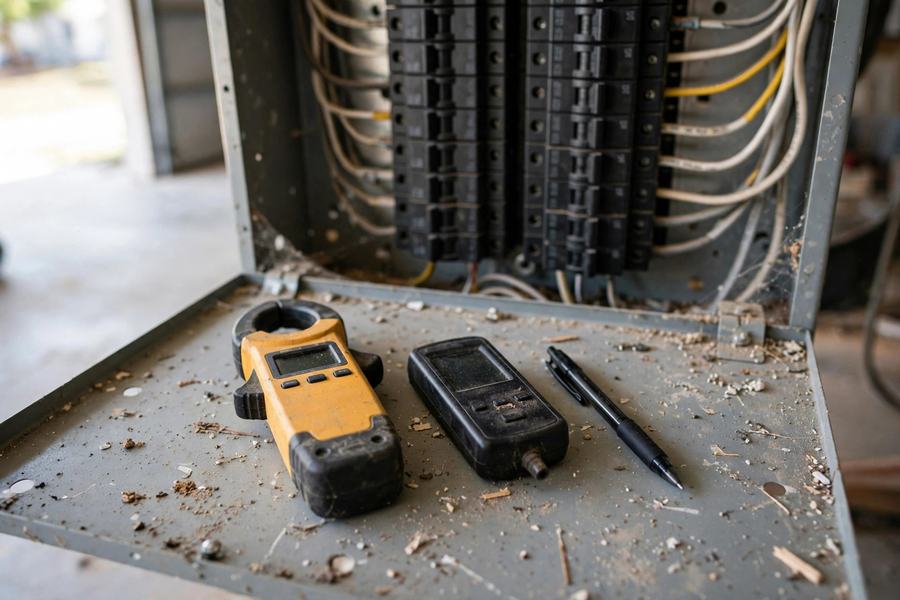
How we approach this job
Emergency response first: For emergency electrical repair in Port Orange, the buying situation is urgency: stop the damage from growing, make the property safe, and document conditions before anything is disturbed.
Signs you need emergency electrical repair
- A burning or fishy electrical smell at an outlet, switch, or the panel. It usually means something is hot, scorched, or unstable, which is a leave-it-off and call-now finding.
- Half the house dark with no tripped breaker you can find. It usually means the outage may be the utility's or the house's, and the meter read separates them.
- A breaker that trips instantly every time it is reset. It usually means safety, not convenience, sets this timeline.
- Sparking, buzzing, or heat at the panel or an outlet. It usually means arcing is an ignition source in progress; that circuit stays off until it is opened and repaired.
What the job involves
What affects the price
- Time of day; after hours work is priced as such, openly
- Fault location: a device, a branch circuit, the panel, or the service entrance each price differently
- Whether storm or utility side work must be coordinated before the home's side can be finished
- Parts: modern breakers and panels are stocked; obsolete panel parts may only exist as a replacement conversation
When it is an emergency
Burning smell, sparking, or a hot panel is a call now situation: stop resetting the breaker, keep hands off the hot device, and if there is smoke or flame, leave and call 911. A single dead outlet or one tripped breaker that resets and holds is a call today. The standing rule: a breaker that trips instantly and repeatedly is protecting you from a fault; defeating it is how electrical fires start.
PLACEHOLDEREmergency Electrical Repair across the Port Orange area
Related services
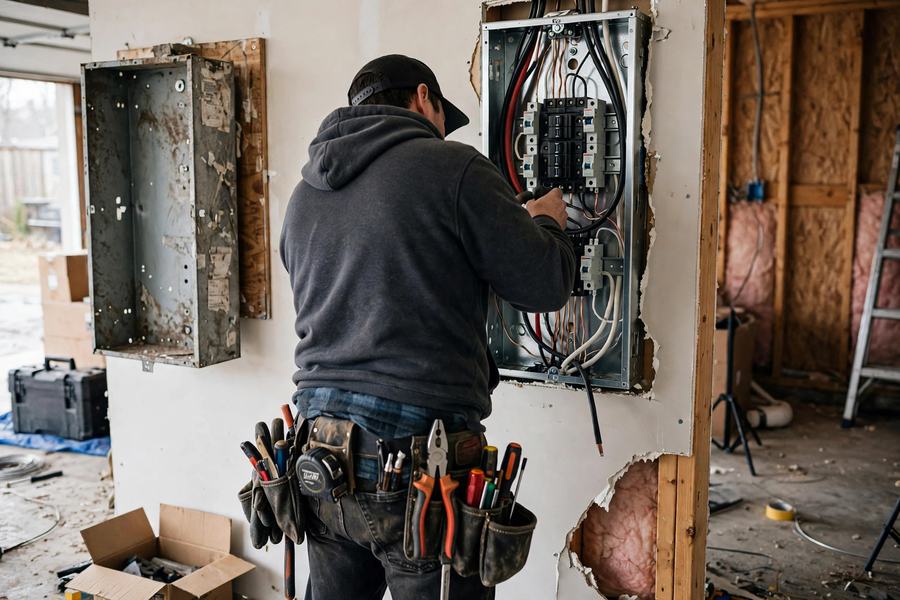
Breaker Panel Replacement & Upgrades
Many established ranch houses still run their first panel while subdivisions added in the growth years filled theirs within months. Replacement sizing looks at hangar, shop, and pool loads already planned, plus grounding and permit steps written out plainly.
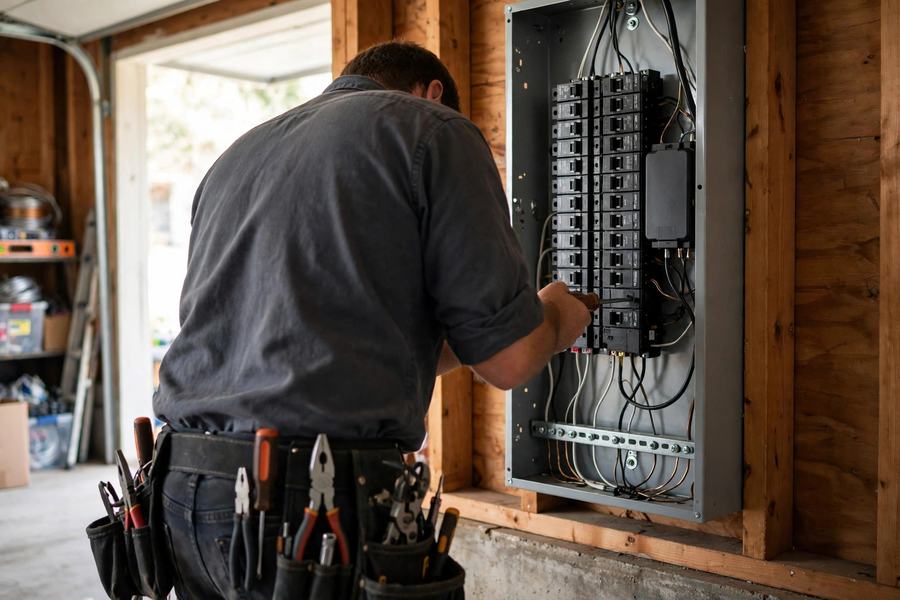
Whole-Home Surge Protection
Afternoon lightning is routine here, and one strike can take a well control, an air handler board, and kitchen appliances together. A single device fitted at the panel is scoped for creek-side condos and detached houses alike, with limits explained upfront.
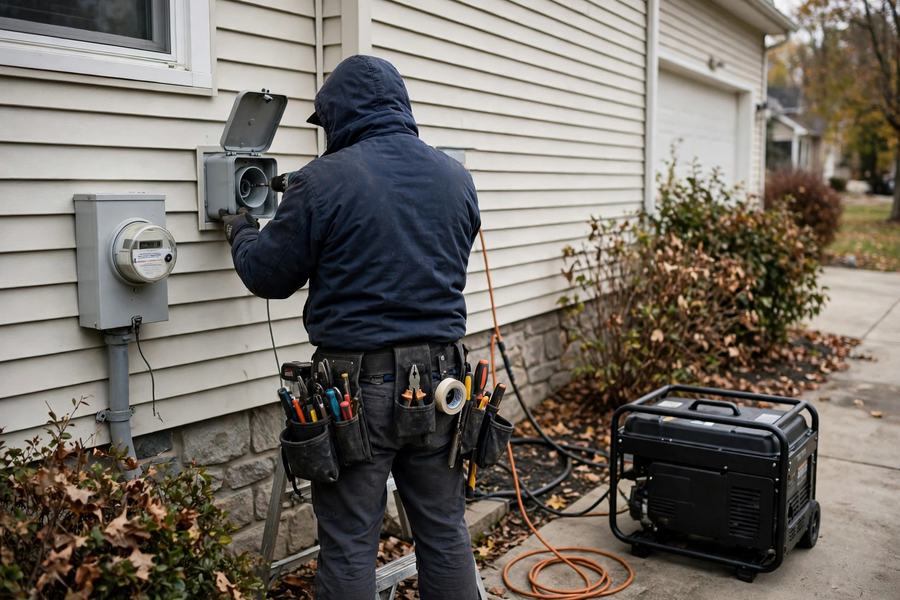
Generator Hookup & Installation
Hurricane outages push the question down to essentials: keep food cold, keep lights on, keep one way to stay cool. Hookups are sized to that short list through an interlock or transfer switch, never through a risky backfeed cord.
Wiring & Rewiring
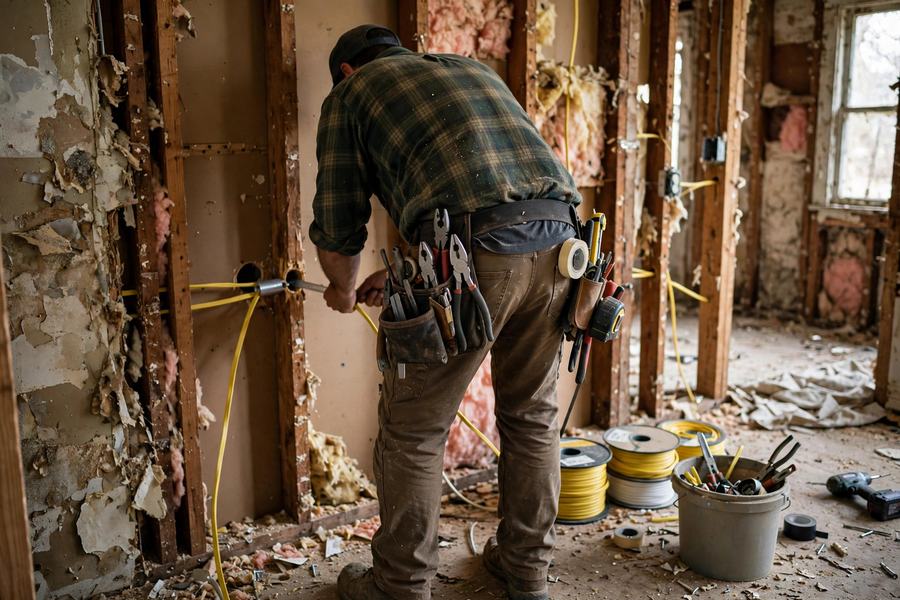
Port Orange was wired in waves, and the aluminum-era streets need a different look than houses built last decade. Work proceeds circuit by circuit after devices are opened and checked, so sound runs stay and only troubled connections get corrected.
Emergency Electrical Repair questions, answered
When is emergency electrical repair an emergency?
Burning smell, sparking, or a hot panel is a call now situation: stop resetting the breaker, keep hands off the hot device, and if there is smoke or flame, leave and call 911. A single dead outlet or one tripped breaker that resets and holds is a call today. The standing rule: a breaker that trips instantly and repeatedly is protecting you from a fault; defeating it is how electrical fires start.
What affects the price of emergency electrical repair in Port Orange?
The main price factors for emergency electrical repair are covered in the cost section above. The contractor confirms the exact price in a written estimate after seeing the job, and nothing is owed until you approve it. The call and the referral are free.
How much does an electrician cost in Port Orange?
National published guides commonly list electricians at $50 to $100 or more per hour plus a trip or service fee, and small jobs such as replacing a device or tracing a fault often total $150 to $400. For larger work in Port Orange, panel replacement commonly falls between $1,300 and $3,000, a generator interlock or transfer switch hookup between $500 and $1,500, whole-home surge protection at a few hundred dollars installed, and a whole-home standby generator at $10,000 to $15,000 or more installed. Compare written prices given after an assessment, with permit costs shown separately.
My breaker keeps tripping. What does it mean, and can I just keep resetting it?
Three causes account for most trips: too much load on the circuit, a short or ground fault somewhere on it, or a breaker that has itself worn out. Unplug the loads and reset once if you want a basic check. A breaker that trips right away, trips with nothing plugged in, or feels warm to the touch is flagging a fault, and forcing it again and again can turn a protective device into a hazard. Tracing normally starts at the panel and then moves through that circuit's outlets and junctions until a specific device, damaged wire, or failing appliance explains it.
Lights flicker across my whole house. Is it my panel or the utility?
If lights dim or flicker all over the house when the air conditioner or another large appliance starts, suspect the service itself: meter connections, the mast, or the utility feed and neutral. A failing utility neutral is the urgent version. It belongs to the utility to repair at no charge to you, but it needs to be reported promptly because it can harm electronics while it lasts. Flicker limited to one circuit points instead to your side, usually a loose connection at a device or inside the panel. Metering the service under load during one visit separates the two, and the utility side should be ruled out before anyone quotes a new panel.
Request a callback
Prefer to talk later? Leave your details and an independent local pro will call you back. No charge to you, no obligation.
Spruce Creek Electric is a free referral service. Submitting this form connects you with independent local contractors who provide the work.